
Bur Oak vs White Oak: What’s the Difference Between Them?
- January 16, 2026
- By Wayne Ridge
So, you’ve got your eye on a couple of oak trees, maybe for your yard or just out of curiosity. You’ve heard of Bur Oak and White Oak, and they sound pretty similar, right? Well, they are both oaks, but there are definitely some differences that might make one a better fit for what you need. Let’s break down the bur oak vs white oak situation so you can tell them apart without much fuss.
An Overview of Both Oak Species
When you’re looking at oak trees, the bur oak and the white oak can sometimes seem pretty similar at first glance. Both are sturdy, long-lived trees that are native to North America, and they can even pop up in the same general areas. But if you take a closer look, you’ll find some pretty clear differences between the bur oak vs white oak. These distinctions show up in their leaves, their bark, their acorns, and even how they grow.
Think of it this way:
- Bur Oak (Quercus macrocarpa): This one’s a bit of a tough guy, often found in places that might be a bit challenging, like near prairies, on dry ridges, or in areas that get flooded sometimes. It’s known for its really big acorns with a “mossy” cap.
- White Oak (Quercus alba): This is a classic forest tree, usually found in more moderate, slightly drier woodland settings. Its acorns are smaller, and its bark tends to be lighter and more flaky than the bur oak’s.
Understanding the bur oak vs white oak differences is key if you’re trying to identify them in the wild or even just pick the right tree for your yard. They might share the same genus, but they’ve got their own unique personalities and needs.
While both are impressive trees, their specific adaptations mean they thrive in slightly different environments. This is why knowing the bur oak vs white oak distinctions can be super helpful for gardeners and nature lovers alike. It’s not just about looks; it’s about where they come from and what they need to grow well.
Botanical Classification
Alright, so you’ve got your Bur Oak and your White Oak, and while they might look a bit similar at first glance, especially if you’re not deep into tree stuff, they actually belong to different groups within the oak family. Think of it like cousins versus siblings – related, but not quite the same.
Both Bur Oak (Quercus macrocarpa) and White Oak (Quercus alba) are part of the larger oak genus, Quercus. However, they fall into different sections of that genus. White Oak is, unsurprisingly, a member of the White Oak group. Bur Oak, on the other hand, is also classified within the White Oak group. This is a bit confusing, I know! The White Oak group is generally characterized by leaves with rounded lobes and acorns that mature in a single season. So, while they share a common ancestor and some general oak traits, they have distinct evolutionary paths and characteristics.
Here’s a quick breakdown of their scientific placement:
- Genus: Quercus (This is the big oak family tree)
- White Oak Group: Both Quercus alba and Quercus macrocarpa belong here.
- Species:
- White Oak: Quercus alba
- Bur Oak: Quercus macrocarpa
It’s interesting how nature sorts things out. Even within the same broad category, like ‘oaks,’ there are these finer distinctions that tell us a lot about their history and how they’ve adapted to different places. It’s not just about looking alike; it’s about their lineage and what makes them unique.
So, while they might share a neighborhood sometimes, and even cross-pollinate occasionally (leading to hybrids that can be tricky to identify!), knowing they’re both in the White Oak group helps explain some of their shared traits, like how their acorns develop. But don’t let that fool you; they’ve got plenty of differences that we’ll get into.
Native Range and Natural Habitat
When you’re trying to figure out where these two oaks naturally hang out, it’s pretty interesting how much they overlap, but also how they have their own preferred spots. Bur oak, scientifically known as Quercus macrocarpa, has a seriously impressive range. It stretches way out west and north, more than a lot of other oaks that stick to the East Coast. You’ll find it doing its thing from the Great Plains all the way to the Atlantic coast, and it’s one of the few oaks that can really thrive out on the prairies. It’s tough, you know? It can handle drier conditions and even the occasional fire that sweeps through those grasslands. It also likes soils that have a good amount of calcium.
White oak, or Quercus alba, is also a big player across eastern North America. It’s a common sight in forests, often preferring areas that are a bit drier but not super dry like some bur oak spots. While they can grow near each other, especially in transitional zones, white oak tends to be more in the middle-of-the-road, mesic forest settings. Think of it as the more classic forest dweller compared to the bur oak’s more rugged, prairie-adjacent vibe.
Here’s a quick rundown of where you’re most likely to find them:
- Bur Oak (Quercus macrocarpa): Found across a vast area of North America, from the eastern woodlands into the Great Plains and even up into parts of Canada. It’s known for its adaptability to prairies, savannas, and even drier ridges, often preferring calcium-rich soils.
- White Oak (Quercus alba): Primarily an eastern North American species, common in deciduous forests. It generally prefers slightly drier forest sites but is less tolerant of the extreme conditions that bur oaks can handle.
It’s worth noting that while both are native to North America, their specific habitat preferences mean you’ll see bur oaks pushing the boundaries into more open, drier, and fire-prone areas, while white oaks are more consistently found in established forest ecosystems. This difference in where they grow is a big clue to their toughness and adaptability.
So, if you’re looking at a tree out on the plains or a really dry hillside, there’s a good chance it’s a bur oak. If you’re deeper in a mixed forest, especially one that isn’t bone dry, white oak is a strong contender. It’s pretty neat how these trees have carved out their own niches across North America.
Leaf Shape and Size Differences
Alright, let’s talk leaves. This is often one of the easiest ways to tell a Bur Oak from a White Oak apart, especially if you’re not a botanist.
The most noticeable difference is the lobe shape: Bur Oak leaves tend to have more rounded, shallower lobes, while White Oak leaves have deeper, more finger-like lobes.
Here’s a quick breakdown:
- Bur Oak (Quercus macrocarpa): These leaves are generally larger, often measuring between 6 to 12 inches long. The lobes are quite variable, but they’re typically broad and rounded, with a distinctive, large, central lobe. The sinuses (the dips between the lobes) aren’t usually very deep. You might also notice the leaves are a bit thicker and can feel slightly leathery.
- White Oak (Quercus alba): White Oak leaves are usually a bit smaller, around 5 to 9 inches long. Their lobes are much more uniform, deeply cut, and rounded. Think of them as more consistently shaped fingers compared to the Bur Oak’s more varied hand.
It’s interesting how the veins work, too. On a Bur Oak, the side veins near the leaf base often angle out more sharply, almost perpendicular to the main stem of the leaf. For White Oaks, those side veins tend to run at a more consistent, shallower angle.
When you’re trying to identify an oak, looking at the leaves is a great starting point. It’s not just about the shape of the lobes, but also how deep those cuts go and how many lobes you see on a single leaf. This detail can really help you distinguish between different oak tree species.
So, next time you’re out and about, take a closer look at the leaves. You might be surprised at how distinct they really are!
Bark Texture and Trunk Appearance
When you’re trying to tell a Bur Oak from a White Oak, take a good look at their bark and how the trunk grows. It’s one of the easier ways to tell them apart, especially when they’re mature.
Bur Oak bark tends to be much rougher and thicker than White Oak bark. Think deep ridges, almost like furrows in a field, and these ridges often break into chunky, irregular scales. The color is usually a darker gray. It feels pretty rugged to the touch. On the other hand, White Oak bark is generally smoother, lighter in color, and often looks like it’s flaking off in thinner pieces. It’s not as deeply furrowed and doesn’t have that chunky, scaly appearance.
Here’s a quick rundown:
- Bur Oak: Darker gray, thick, deeply ridged, with chunky, irregular scales. Feels very rough.
- White Oak: Lighter gray, thinner, smoother, often with peeling or flaky sections. Less rugged.
As for the trunk itself, Bur Oaks can have a more imposing presence. Their massive branches often jut out at sharp angles, sometimes giving the tree a bit of a quirky or even gnarled look, especially if it’s grown in tougher conditions. White Oaks, especially when growing in a forest setting, tend to have a more upright, vase-like shape with branches that angle upwards more gently from the trunk.
It’s interesting how the bark and trunk shape can tell you so much about a tree’s life. The rough, thick bark of the Bur Oak is a sign of its resilience, helping it withstand fires and harsh weather. The smoother bark of the White Oak suggests a different kind of adaptation, perhaps more suited to the sheltered environment of a dense forest.
So, next time you’re out and about, glance at the bark. It’s a solid clue to figuring out which oak you’re looking at.
Acorn Size and Characteristics
When you’re trying to tell a Bur Oak from a White Oak, the acorns are a pretty big clue. Seriously, it’s like night and day.
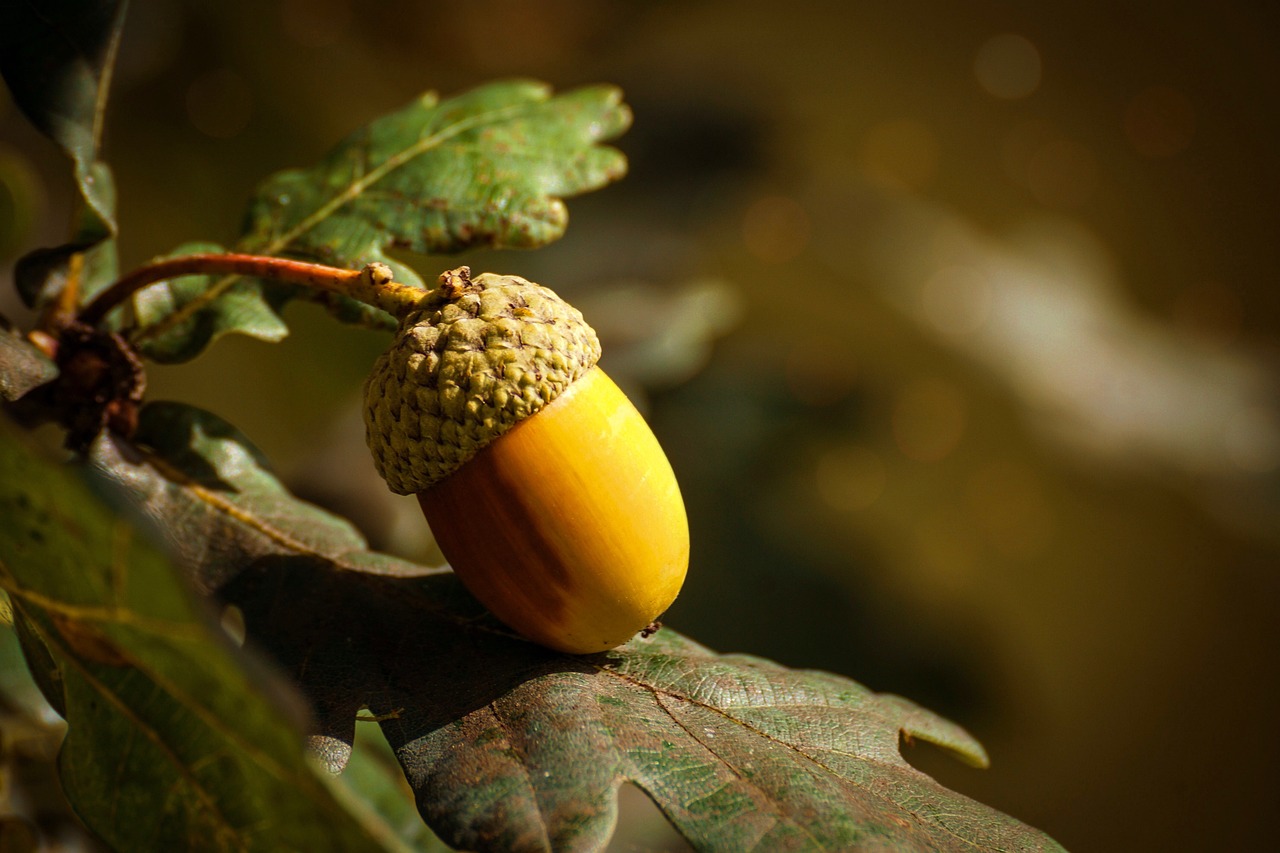
Bur Oak acorns are famous for their size and their distinctive caps. The cap on a Bur Oak acorn is usually quite large, often covering half or even more of the acorn itself, and it’s got this really cool, mossy-looking fringe around the edge. This fringe is made up of scales with elongated, curling tips. It’s this feature that gives the Bur Oak its nickname, the “mossy-cup oak.”
White Oak acorns, on the other hand, are generally smaller and have a much less dramatic cap. The cap on a White Oak acorn typically covers only about a quarter of the acorn, and its scales are usually smoother and don’t have that prominent fringe. They look much more like a typical acorn you might imagine.
Here’s a quick rundown:
- Bur Oak Acorns:
- Large size.
- The cap covers 1/2 or more of the acorn.
- Cap has a distinct, mossy fringe with curling scales.
- White Oak Acorns:
- Smaller size.
- The cap covers about 1/4 of the acorn.
- Cap scales are smoother, lacking a prominent fringe.
So, if you find a big acorn with a fuzzy-looking cap, chances are you’re looking at a Bur Oak. If it’s smaller with a simpler cap, it’s more likely a White Oak. It’s a pretty reliable way to tell them apart, especially if you can’t get a good look at the leaves or bark.
Growth Rate and Mature Size Comparison of Bur Oak vs White Oak
When you’re thinking about planting an oak, how fast it grows and how big it gets are pretty important details. Nobody wants a tree that takes forever to look like anything, or one that ends up taking over the whole neighborhood.
Bur Oaks tend to be a bit faster growers than White Oaks, especially when they’re younger. This means you’ll see more noticeable growth year after year with a Bur Oak. White Oaks, on the other hand, are more of a slow-and-steady type. They take their time establishing themselves, but once they do, they become incredibly long-lived and majestic.
Here’s a general idea of what you can expect:
- Bur Oak: Typically grows between 1 to 2 feet per year. They can reach heights of 60 to 80 feet, with a spread of 60 to 80 feet. They often develop a broad, rounded crown.
- White Oak: Usually grows about 1 to 1.5 feet per year. Mature trees can get quite tall, often reaching 50 to 80 feet, sometimes even up to 100 feet, with a spread of 50 to 80 feet. Their shape can be more variable, sometimes quite stately and upright.
It’s worth noting that these are just averages. The actual growth rate and final size can be influenced by a lot of things, like soil quality, water availability, sunlight, and even the specific climate you’re in. A Bur Oak planted in ideal conditions might shoot up faster than one struggling in poor soil.
Both species are known for their impressive mature sizes, capable of becoming massive trees that provide significant shade and presence. However, the Bur Oak often achieves a substantial size more quickly, making it a popular choice if you’re looking for a quicker impact in your landscape design. If you’re interested in exploring various oak tree types suitable for your yard, there are options ranging from quick-growing shade trees to stately white oaks, ensuring you can find an ideal fit for your landscape design.
So, if you’re impatient and want a big tree sooner rather than later, the Bur Oak might be your pick. If you’re planning for the long haul and appreciate a tree that develops with a bit more patience, the White Oak is a fantastic choice. You can find a wide variety of oak trees to suit your needs here.
Lifespan and Longevity
When you think about oak trees, you probably imagine them standing tall for ages, and you’d be right. Both bur oak and white oak are known for their impressive lifespans, making them fixtures in the landscape for generations. These trees are built to last, often outliving human history.
Generally speaking, oak trees can live for a really long time. We’re talking centuries, not just decades. While specific lifespans can vary based on environmental conditions and whether they’re in a forest or out in the open, both bur oak and white oak are champions of longevity.
Here’s a little breakdown:
- Bur Oak (Quercus macrocarpa): These trees are known for their resilience and can easily live for 200 to 400 years. Some individuals have been recorded living even longer, especially when they’re in favorable conditions and left undisturbed.
- White Oak (Quercus alba): Similar to the bur oak, the white oak is a long-lived species. You can expect them to live anywhere from 200 to 500 years. They are a significant part of forest ecosystems and have been around for a very, very long time.
It’s pretty amazing to think about a tree that was planted when your great-great-great-grandparents were around, still standing strong today. They’ve seen a lot, that’s for sure.
The sheer age these trees can reach means they play a vital role in their ecosystems, providing habitat and resources for countless species over vast stretches of time. Their long lives are a testament to their robust nature and adaptability.
So, if you’re planting an oak, you’re not just adding a tree to your yard; you’re adding a living monument that could be around for centuries. It’s a commitment, but one that offers incredible rewards in terms of beauty and ecological contribution. You’re essentially planting a piece of history that will continue to grow and thrive. For more on the general lifespan of oaks, you can check out oak trees typically live.
Soil and Water Requirements for Bur Oak vs White Oak
When it comes to where these trees like to put down roots, there are some noticeable differences between the Bur Oak and the White Oak, though they can sometimes overlap.
Bur Oaks are pretty tough cookies. They can handle a wide range of soil types, from pretty dry, sandy spots to heavier clay soils. They’re known for their deep root systems, which help them survive in places where other trees might struggle. This makes them a great choice for areas that don’t get a lot of rain or have less-than-ideal soil conditions. They also don’t mind alkaline soils, which is a plus in some regions.
White Oaks, on the other hand, tend to prefer soils that are a bit more consistent. They do best in well-drained loams, but they can also tolerate some moisture. While they can handle drier conditions, they generally perform better with a bit more consistent moisture than a Bur Oak might need. They’re not as keen on really wet feet or extremely dry, sandy sites compared to their Bur Oak cousins.
Here’s a quick rundown:
- Bur Oak: Tolerates a wide variety, including dry, sandy, clay, and alkaline soils. Very drought-tolerant once established.
- White Oak: Prefers well-drained loams. Can handle some moisture but generally does better with consistent, moderate watering. Less tolerant of extreme dryness or very wet conditions compared to the Bur Oak.
Both trees are pretty resilient once they get going, but understanding their preferences can help you pick the right one for your specific spot. Bur Oak is the more adaptable one when it comes to tough conditions, while White Oak likes things a bit more balanced.
In terms of water, both species appreciate consistent moisture when they are young and establishing. However, mature Bur Oaks are remarkably drought-tolerant thanks to those deep roots. White Oaks also benefit from consistent watering, especially during dry spells, but they aren’t quite as famed for their ability to go long stretches without a drink as the Bur Oak is.
Climate and Hardiness Zones
When you’re picking out a tree, thinking about where you live and what the weather’s like is pretty important. Luckily, both Bur Oak and White Oak are pretty tough cookies when it comes to climate, but they do have their preferences.
Bur Oak (Quercus macrocarpa) is a real trooper, known for its wide range across North America. It can handle some seriously cold winters and hot summers, making it adaptable to a lot of different places. It’s often found in areas that get a lot of sun and can even deal with drier conditions once it’s established. This tree is also known for its tolerance to things like pollution and salt, which is why you sometimes see it in urban settings or along roadsides.
White Oak (Quercus alba), while also hardy, tends to prefer a more moderate climate. It’s a staple in eastern North American forests and generally does best in areas with distinct seasons but without the extreme temperature swings that Bur Oak can shrug off. It’s not as keen on super dry or super wet conditions compared to Bur Oak’s broader tolerance.
Here’s a quick look at their general hardiness zones:
- Bur Oak: Typically thrives in USDA Hardiness Zones 3 through 8. This means it can handle some pretty frigid winters.
- White Oak: Generally does well in USDA Hardiness Zones 3 through 9. While it can handle cold, its upper limit suggests it might appreciate slightly milder summers than the Bur Oak in some regions.
Both trees are deciduous and will lose their leaves in the fall. Their ability to withstand different climates is a big reason why they are found across such vast areas of the continent. If you live in a region with very harsh winters, the Bur Oak might have a slight edge in terms of sheer resilience.
So, if you’re in a place that gets really cold, or you’re looking for a tree that can handle a bit of everything, the Bur Oak is a solid choice. White Oak is also a great option for many areas, especially if you’re aiming for a more classic forest feel and your climate is a bit more predictable.
Common Uses of Bur Oak vs White Oak in Landscaping and Woodworking
Both bur oak and white oak are pretty popular trees, and for good reason. They’re tough, they look great, and their wood is super useful. When it comes to planting them in your yard, they both make solid choices, but they have slightly different vibes.
Bur oaks are often picked for their rugged good looks and their ability to handle tough conditions. They’re known for those big, gnarly branches and that distinctive, almost mossy-looking acorn cup. Because they’re so hardy and can tolerate a wide range of soils and even pollution, they’re a go-to for parks, street trees, or even just as a statement piece in a large yard. People also like them as memorial trees. Just be aware, their roots can get pretty extensive, so don’t plant them too close to any underground pipes!
White oaks, on the other hand, are often admired for their more classic, stately appearance. They tend to have a more upright growth habit, especially in forests, and their leaves turn a lovely red-purple in the fall. While they’re also used in landscaping, they’re perhaps even more famous for their wood. White oak is the traditional choice for making barrels, especially for aging whiskey and wine. That tight grain makes it impermeable, which is exactly what you want for holding spirits. It’s also used in furniture, flooring, and boat building because it’s so strong and resistant to rot.
Here’s a quick rundown:
- Bur Oak: Great for tough spots, large open areas, street trees, and anywhere you want a tree with a lot of character. Known for its drought and pollution tolerance.
- White Oak: Excellent for formal landscaping, shade trees, and highly prized for its wood, particularly for barrel making, furniture, and flooring.
When it comes to woodworking, white oak really shines. Its dense, strong wood is perfect for things that need to last, like barrels and high-quality furniture. Bur oak wood is also strong and durable, but it’s less commonly sought after for fine woodworking compared to white oak, though it’s still perfectly suitable for many uses.
So, whether you’re looking for a tree to plant or lumber for a project, both offer something special. It just depends on what you need them for.
Which Is Better for Your Yard? Choosing Between Bur Oak vs White Oak
So, you’ve learned all about Bur Oaks and White Oaks, and now you’re probably wondering which one is the right fit for your place. It really boils down to what you’re looking for and what your yard can offer. Both are fantastic trees, but they have their own quirks.
If you’ve got a spot that’s a bit challenging – maybe it gets really dry, or you’re dealing with alkaline soil – the Bur Oak might be your best bet. These trees are tough cookies, known for their ability to handle tough conditions. They’re also a great choice if you’re in an area that experiences prairie-like environments or even some drier ridges. Plus, their acorns are pretty distinctive with that fringed, mossy cup, which is a fun detail.
On the other hand, if your yard has more typical forest soil, perhaps slightly dry but not extreme, the White Oak could be a perfect match. They’re a classic for a reason, providing beautiful fall color and a stately presence. They’re also a big deal in the barrel-making world, which is pretty interesting if you’re into that sort of thing.
Here’s a quick rundown to help you decide:
- Bur Oak:
- Tolerates dry conditions and alkaline soils well.
- Good for prairie or savanna-like settings.
- Distinctive acorns with a mossy fringe.
- Can handle tough sites, making them a good choice for urban environments.
- White Oak:
- Prefers more mesic to slightly dry forest soils.
- Known for beautiful red-purple fall color.
- Important for woodworking, especially for barrels.
- A classic, adaptable tree for many landscapes.
Ultimately, think about your soil type, the amount of sun and moisture your yard gets, and what you want the tree to do. Do you need a tree that can survive on minimal water? Or are you looking for that classic oak look with great fall color? Both trees offer shade and beauty, but their specific needs and strengths differ.
Don’t forget to consider the mature size too. Bur Oaks can get massive, with wide-spreading branches, while White Oaks also grow large but might have a slightly different form. Checking out local examples of both species can also give you a real feel for how they might look and perform in your specific climate.
Deciding between a Bur Oak and a White Oak for your yard can be tricky. Both are strong, beautiful trees, but they have different needs and looks. If you’re unsure which one is the best fit for your space, or if you need help with any tree care, visit our website today to learn more or get a free quote!
Frequently Asked Questions
What’s the main difference between Bur Oak and White Oak leaves?
Bur Oak leaves usually have shallower, more rounded lobes. White Oak leaves tend to have deeper lobes that are more pointed. Think of Bur Oak leaves as being a bit more ‘wavy’ and White Oak leaves as being more ‘fingered’.
How can I tell Bur Oak and White Oak apart by their bark?
Bur Oak bark is typically thicker, darker, and has deep, rugged ridges that can look like tough, long plates. White Oak bark is usually thinner, lighter in color, and tends to flake off more, sometimes looking a bit scaly.
Are Bur Oak acorns different from White Oak acorns?
Yes! Bur Oak acorns are famous for their large size and a cap that covers at least half of the acorn, often looking ‘mossy’ or fringed around the edge. White Oak acorns are usually smaller, and their caps cover only a small part of the acorn, with scales that aren’t as elongated or fringed.
Which oak tree grows faster, Bur Oak or White Oak?
Generally, White Oak trees tend to grow a bit faster than Bur Oak trees, especially when they are young. However, both are considered relatively slow-growing compared to many other tree types.
Can Bur Oak and White Oak grow in the same places?
They can sometimes be found in similar areas, but Bur Oaks often prefer drier spots or areas that might flood, and they do well on soils rich in calcium. White Oaks are more commonly found in forests with moderate to slightly dry conditions.
Are Bur Oak trees or White Oak trees more resistant to drought?
Bur Oaks are known for being very tough and resistant to drought, as well as fire. They have deep root systems that help them survive in tough conditions. White Oaks are also quite hardy but might not handle extreme drought as well as Bur Oaks.
What are the acorns from these trees used for?
Both Bur Oak and White Oak acorns are edible for wildlife like squirrels and birds. Historically, people have also used acorns from both species as a food source, often grinding them into flour for baking.
Which oak is better for a home landscape?
Both make excellent shade trees. If you have very dry soil or want a tree known for its toughness and interesting, rugged look, Bur Oak might be a great choice. If you prefer a more classic oak shape and slightly faster growth, White Oak could be better. Consider the space you have, as both can become very large trees.